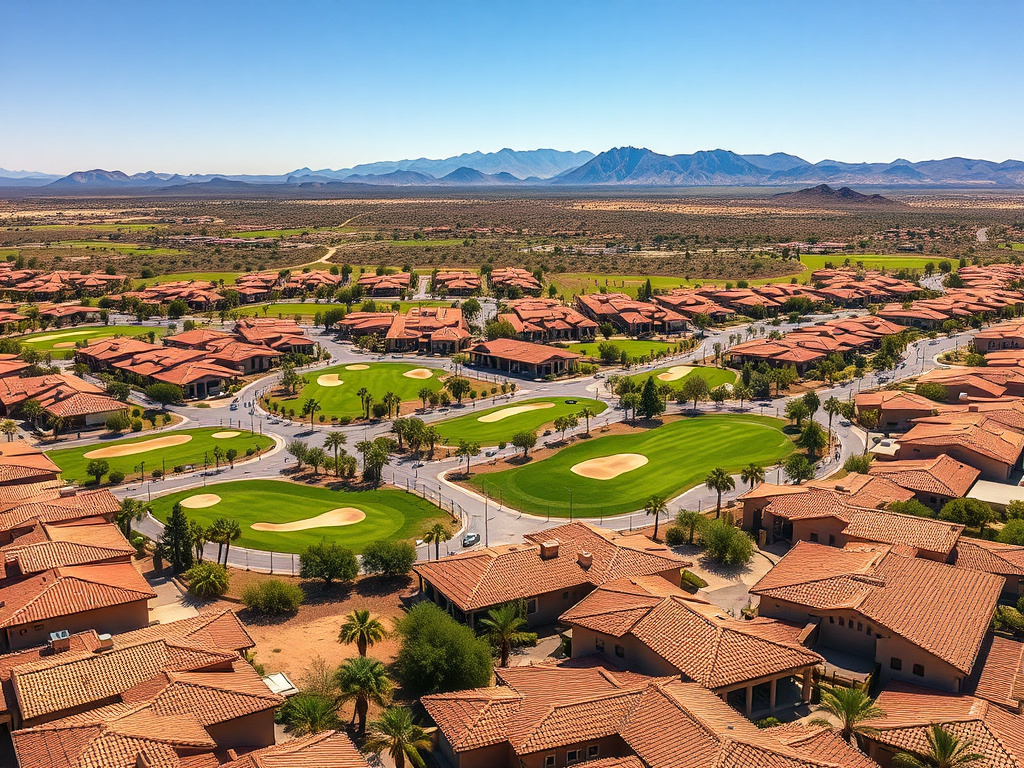
Moving to — or retiring within — Sun Lakes, Arizona changes more about your insurance picture than most new residents expect. This isn't a generic suburb. It's a purpose-built, active-adult golf community organized into five distinct HOA associations — Sun Lakes Country Club, Cottonwood, Palo Verde, Ironwood, and Oakwood (governed jointly as IronOaks) — spanning roughly 6,700 homes and nearly 99 holes of golf. That structure creates insurance realities that a national call-center policy, written for a generic homeowner, simply isn't built to handle well.
This guide walks through the coverage areas that actually matter here: home insurance tuned to desert monsoon risk, the auto insurance discounts and quirks that come with retiree driving patterns, the HOA/HO-6 confusion that trips up nearly every new villa owner, the golf cart coverage gap almost nobody thinks about until it's too late, the snowbird vacancy-clause problem that catches part-time residents off guard every single year, and the case for personal umbrella coverage once your home is paid off and your nest egg has grown. We'll close with a practical relocation checklist and an honest case for working with an independent agent instead of a single-carrier call center.
Why Insurance Looks Different in a Golf Retirement Community
Three things make Sun Lakes structurally different from a typical residential ZIP code, insurance-wise:
First, occupancy isn't constant. A meaningful share of Sun Lakes homes sit empty for months at a time as owners head north for the summer. Standard homeowners policies are underwritten assuming near-continuous occupancy, and they say so explicitly in the fine print — which becomes a problem exactly when you're not there to notice.
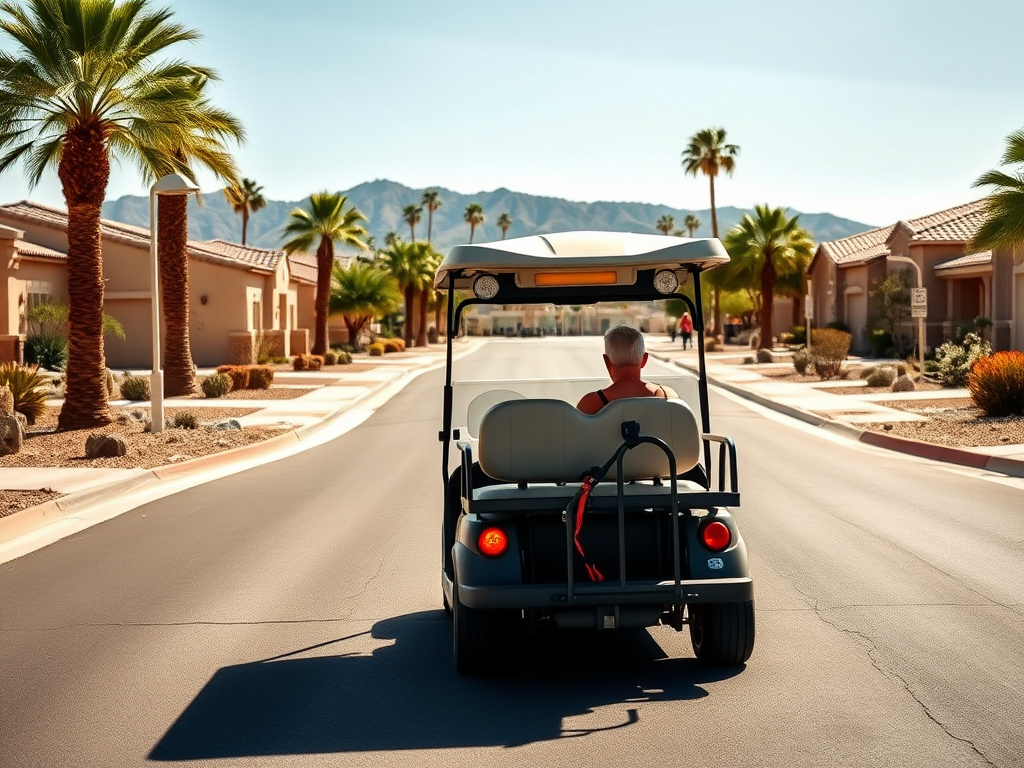
Second, transportation includes golf carts and LSVs as a daily reality, not a weekend novelty. Carts move between the five communities on both private cart paths and public/community streets, and that blurs the line between "recreational equipment on your own property" (which a homeowners policy might touch) and "a vehicle operating in shared traffic" (which it almost certainly doesn't cover).
Third, ownership structures are more layered than a typical single-family neighborhood. Many residents own villas or patio homes under a master HOA policy, which creates real confusion about where the association's coverage ends and personal responsibility begins.
None of this means insurance in Sun Lakes is complicated in a bad way — it just means a generic policy, bought without local context, tends to leave gaps in exactly the places retirees here are most exposed. Let's go through each one.
Home Insurance Basics for Sun Lakes Homeowners
A standard HO-3 homeowners policy covers four core things: your home's structure, your personal belongings, your liability if someone is hurt on your property, and additional living expenses if a covered loss displaces you temporarily. That's true everywhere in the country. What changes in Sun Lakes is the underwriting detail underneath those four categories.
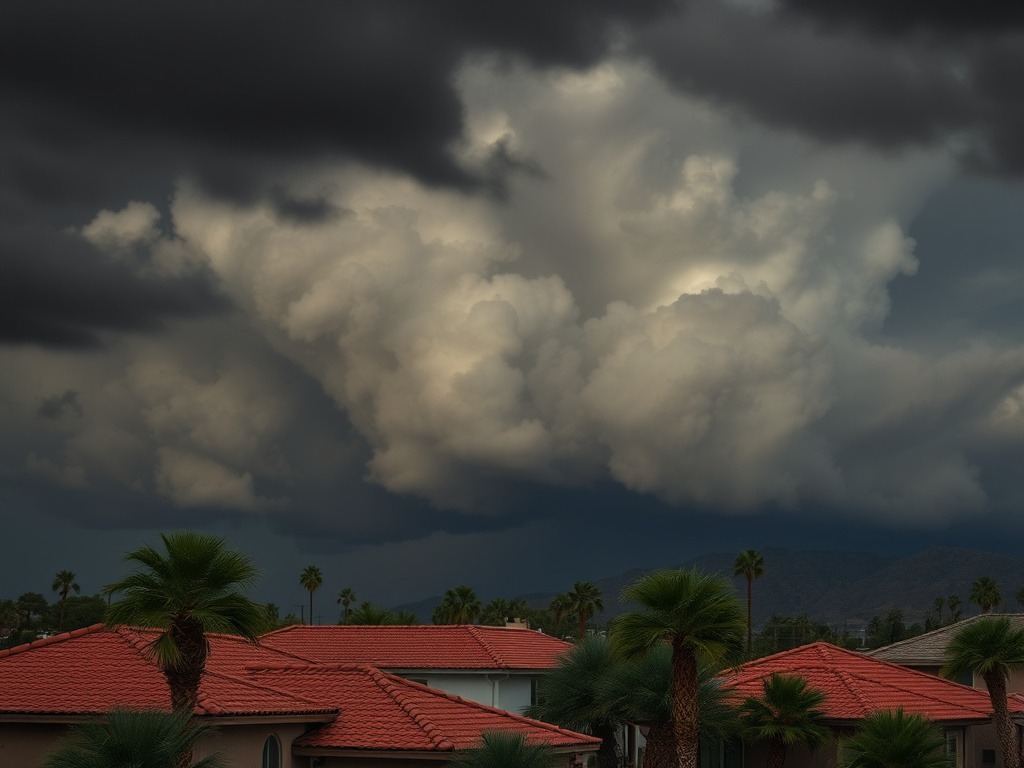
Monsoon wind, hail, and dust storms are the headline Arizona-specific risk. Roughly June through September, the East Valley experiences genuine monsoon weather — high wind, hail, and dust storms (locally called haboobs) capable of damaging roofs, block walls, pool enclosures, and landscaping. Most standard AZ homeowners policies include wind and hail as a covered peril, but the deductible structure varies a lot by carrier. Many insurers apply a separate, often percentage-based wind/hail deductible that's meaningfully higher than your everyday deductible — which means a roof claim after a real monsoon storm can cost more out-of-pocket than most homeowners assume until they read the declarations page closely.
Pools and Arizona rooms (screened patios) are common across all five Sun Lakes communities and need specific attention. In-ground pools are typically covered as part of the dwelling or as an attached structure, with pool liability generally folded into your policy's liability section. Screened patios often carry their own, lower sub-limit for screen damage specifically — worth confirming before monsoon season rather than after.
Roof age and condition matter more here than in newer-construction markets, because some of Sun Lakes' housing stock (particularly in the original Sun Lakes Country Club neighborhood, established in 1972) is older. Older roofs sometimes get settled on an actual-cash-value (depreciated) basis for wind/hail claims rather than full replacement cost — a detail worth knowing before you need it.
The bottom line: home insurance basics are universal, but the details that decide what you actually collect after a claim are Arizona-specific, and in Sun Lakes specifically monsoon-specific. This is exactly the kind of thing an independent agent should walk through with you carrier by carrier, not something you discover for the first time filing a claim.
HOA and Sub-Association Coverage: What Your Master Policy Does and Doesn't Cover
This is, in our experience, the single most misunderstood coverage question among new Sun Lakes residents — particularly those relocating from states where HOA structures work differently.
Each of Sun Lakes' communities — Sun Lakes Country Club, Cottonwood, Palo Verde, and the jointly governed Ironwood/Oakwood (IronOaks) — carries its own master insurance policy through its HOA. That master policy typically covers shared common areas (clubhouses, shared golf facilities, community pools) and, depending on the specific association's governing documents, sometimes the exterior shell or structure of attached units. What it generally does not cover is the inside of your unit: interior finishes, personal belongings, upgrades you've made, and your personal liability for something that happens inside your own four walls.
That's what an individual HO-6 policy is for, and in almost every case you need one even if your building's exterior is technically covered by the master policy. Skipping it because you assume "the HOA covers everything" is one of the most expensive mistakes we see new residents make — usually discovered the hard way, after a loss.
There's a second piece worth understanding: loss assessment coverage. If your HOA levies a special assessment against every owner to cover a shared loss that exceeds the master policy's limits — say, major storm damage to a shared clubhouse or golf facility — loss assessment coverage on your HO-6 policy reimburses you for your share of that bill. Given how amenity-rich Sun Lakes is, this is worth confirming specifically rather than assuming it's bundled in automatically.
Because each of the five HOAs has its own governing documents and its own master policy language, this isn't a one-size-fits-all answer — it's worth having someone actually read your specific HOA's master policy before finalizing your individual coverage.
Auto Insurance for Retirees: Discounts, Bundling, and Low-Mileage Considerations
Arizona requires liability coverage of at least $25,000 per person / $50,000 per accident for bodily injury and $15,000 for property damage. Treat those as a legal floor, not a target — many Sun Lakes retirees carry meaningfully higher limits, especially once an umbrella policy is added, since umbrella coverage requires higher underlying auto limits to qualify in the first place.
The good news for retirees: several discount categories tend to work in your favor. Low-mileage or usage-based discounts are common for drivers who put fewer annual miles on a vehicle — a natural fit for residents driving locally around Sun Lakes and the greater Chandler area rather than commuting to an office. Mature-driver and defensive-driving-course discounts are widely available and often underused simply because people don't ask. And bundling home and auto with the same carrier frequently unlocks a multi-policy discount, though it's not automatically the cheapest option for every household — sometimes the best home carrier and the best auto carrier for your specific risk profile aren't the same company, which is exactly why comparing both bundled and split pricing is worth the extra five minutes.
One question that comes up constantly among part-time residents: does my Arizona policy cover a vehicle I keep at a summer home in another state? It depends entirely on the carrier and how that second vehicle is set up on your policy — some insurers can cover an out-of-state-garaged vehicle under one policy, while others require a separate policy through a locally licensed agent in that state. This is worth reviewing explicitly rather than assuming your coverage simply follows you.
The Golf Cart Question: Why Your Homeowners Policy Probably Isn't Enough
If there's one coverage gap that's almost universal among new Sun Lakes residents, it's this one. Golf carts and low-speed vehicles (LSVs) aren't a novelty here — they're genuine daily transportation, moving across all five communities on private cart paths and on public and community streets alike.
Most homeowners policies extend only limited coverage to a golf cart, and typically only while it's on your own property. Once a cart leaves your lot line onto a shared street, liability coverage is commonly excluded outright or capped at a sub-limit that doesn't come close to reflecting real injury risk. That's a serious exposure in a community where carts share the road with pedestrians, other carts, and parked vehicles every single day.
Arizona law adds a wrinkle worth understanding: it distinguishes golf carts (limited to golf-course and immediately adjacent use, lower top speed) from low-speed vehicles (LSVs), which meet federal safety-equipment standards, can legally be driven on public roads with speed limits up to 35 mph, and generally require registration and insurance similar to a standard motor vehicle. A meaningful number of Sun Lakes carts are actually LSVs once you account for how far residents actually drive them — which changes both the legal requirements and the right insurance product.
A dedicated golf cart policy typically covers three things: liability for injury or property damage you cause to someone else, physical damage coverage for the cart itself, and often medical payments coverage for you and your passengers regardless of fault. It's also worth knowing that a cart's liability policy can serve as the underlying coverage your personal umbrella policy stacks on top of — closing two gaps with one conversation.
Snowbirds and Seasonal Occupancy: The #1 Coverage Gap We See
If you split your year between Sun Lakes and somewhere else, read this section twice.
Most standard HO-3 policies include a vacancy clause — language that reduces or suspends certain coverages (commonly theft, vandalism, and sometimes water damage) once a home has sat unoccupied beyond a set period, often 30 to 60 days depending on the carrier. A policy written as though your home is occupied year-round simply doesn't perform the way you'd expect during the months you're away, and that's a genuinely common and expensive surprise.
The fix usually isn't a totally different policy — it's a seasonal or secondary-residence endorsement added to your existing policy, or choosing a carrier whose base policy is written to anticipate part-year occupancy without penalty in the first place. The right structure depends on how many months your home actually sits empty and which specific carrier you're with, which is exactly the kind of review an independent agent should be doing proactively rather than something a claim adjuster tells you about after a loss.
Some carriers also require periodic property checks — commonly every three to seven days — by a neighbor, property manager, or check-in service as a condition of maintaining full coverage on a seasonally vacant home, and some ask about water-shutoff valves or leak-monitoring devices. These requirements genuinely vary by insurer, so confirming your specific carrier's expectations matters more than assuming a generic standard applies.
Personal Umbrella Insurance: Protecting What You've Built
Personal umbrella insurance adds a layer of liability protection above the limits on your home, auto, and golf cart policies, paying out only after those underlying limits are exhausted. It's a natural fit for Sun Lakes retirees for a simple reason: paying off a home and building retirement savings raises the financial stakes of a lawsuit, even for an accident that has nothing to do with negligence on your part.
A reasonable starting point is umbrella coverage that roughly matches or exceeds your net worth, since that's generally what's genuinely at risk beyond your underlying policy limits. Policies are typically sold in increments — $1 million, $2 million, and up — and the cost is often surprisingly modest relative to the protection added.
Umbrella coverage is also directly relevant to golf-related and community-social liability — an errant shot, a cart-related incident, or a guest injury during a gathering can all fall under an umbrella policy's liability protection, provided the underlying policy (home, auto, or golf cart) is in place first.
A Relocation Checklist: What to Review When You Move to Sun Lakes
If you're new to Sun Lakes or planning a move soon, here's a practical checklist:
- Re-shop home and auto coverage with an Arizona-licensed agent rather than simply transferring a policy from your previous state.
- Add golf cart coverage if you'll be driving one — a near-universal need here, even if it wasn't on your radar before moving.
- Confirm whether you need a separate HO-6 policy if you're buying a villa or condo, and get your specific HOA's master policy language checked.
- Re-evaluate umbrella coverage now that liquid assets often increase after downsizing from a larger home elsewhere.
- Time your old-state policy cancellation carefully so there's no gap in coverage — and no unnecessary premium overlap either.
- Plan for seasonal occupancy from day one if you expect to become a snowbird, rather than retrofitting a vacancy endorsement after the fact.
How to Work With an Independent Agent
Everything above points to the same conclusion: Sun Lakes insurance decisions are genuinely local, and a single-carrier call center — built to sell one company's standard template — isn't positioned to catch these nuances. An independent agency isn't tied to one insurer, so it can compare coverage and pricing across multiple carriers against your specific situation: a part-year-occupied home, a golf cart crossing HOA boundaries, a recent out-of-state relocation, a villa under a master HOA policy you haven't fully read yet.
That's the entire premise behind Sun Lakes Insurance, an agency of Contractors Choice Agency (NPN #8608479). We're not selling one company's product — we're comparing carriers on your behalf and walking you through the real differences in plain language.
Get Your Sun Lakes Insurance Questions Answered
If you're relocating to Sun Lakes, adding a golf cart, heading north for the summer for the first time, or simply due for a policy review, we'd rather talk it through now than have you discover a gap during a claim. Call us at 844-967-5247, email josh@contractorschoiceagency.com, or request a free quote — no obligation, and we'll walk you through exactly what your specific situation needs. Serving Sun Lakes, AZ and the greater Chandler area.